


























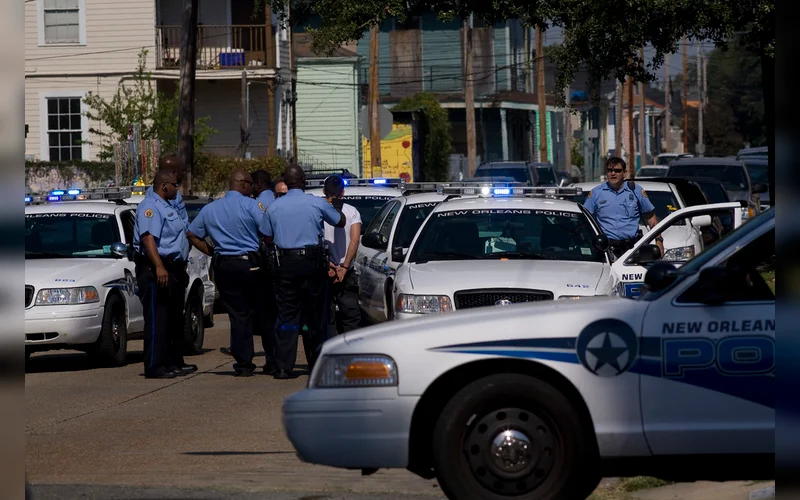
A brief moment can travel far once cameras are involved. That’s what happened when 30-year-old Steven Rivers was being escorted to a transport vehicle and a female detective walked by, creating a scene that quickly caught public attention. The interaction—short, silent, and open to interpretation—sparked a wave of reactions online, reminding us how easily narratives form when context is limited.
What stood out wasn’t just the moment itself, but how quickly assumptions followed. In situations like this, it’s easy for clips or descriptions to be shaped into something they may not be. A look, a pause, a reaction—each can be read a dozen different ways depending on who’s watching. Without full details, speculation fills the gaps, and suddenly a private individual becomes a public topic.
It’s also worth remembering that being escorted does not equal guilt. Due process exists for a reason, and everyone deserves it. Viral attention often skips that step, turning moments into judgments before facts are established. That rush can have real consequences for the people involved—long after the clip stops circulating.
Beyond the individual case, the incident highlights a broader issue: how quickly we consume and comment on moments involving law enforcement without knowing the full story. Social media rewards speed and reaction, not patience or nuance. But justice—and fairness—require the opposite.
In the end, the moment serves as a reminder to slow down. Watch carefully. Ask what’s missing. And resist the urge to turn incomplete information into a finished verdict. Some stories deserve context before commentary—and some moments are exactly what they are: just moments, not conclusions.