
























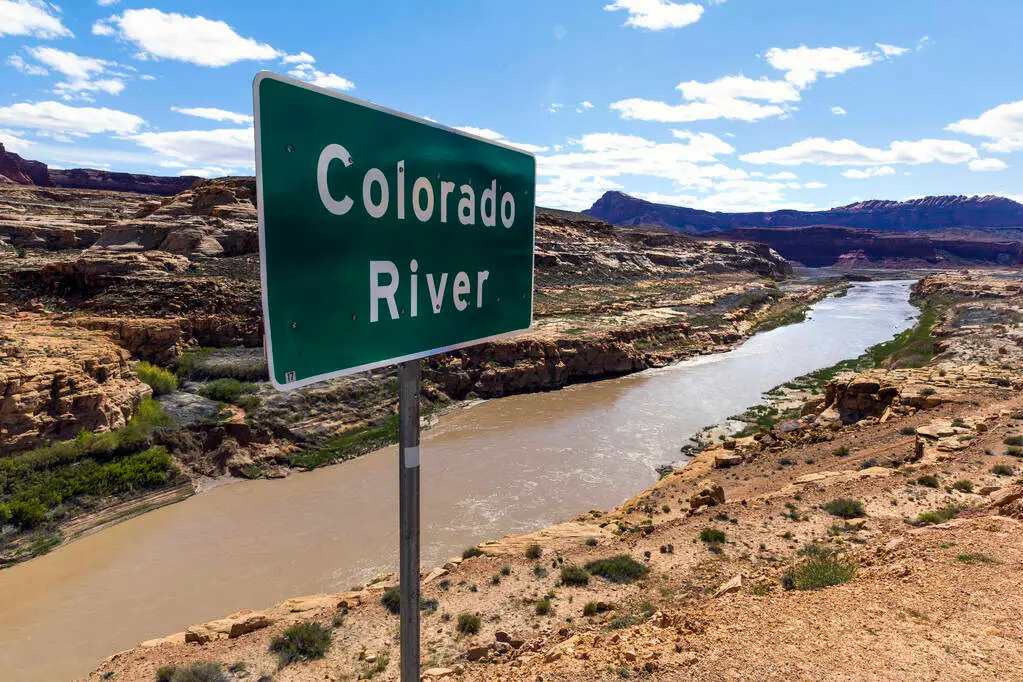
Federal officials have outlined the most detailed timeline yet for a potential breakthrough in the ongoing negotiations over the Colorado River water supply, which is crucial for 40 million Americans. Assistant Secretary of Water and Science Andrea Travnicek announced that a new document for public review is expected by the end of this year, coinciding with critical policy discussions shaping the future of water management in the American West.
The seven states dependent on the Colorado River—Nevada, California, Arizona, Colorado, Utah, New Mexico, and Wyoming—are under increasing pressure to reach a consensus before the February 14 deadline. This urgency is heightened as representatives gather in Las Vegas for the Colorado River Water Users Association conference, underscoring the fragile future of the basin.
Travnicek emphasized the need to move beyond rhetoric, stating, “The river will not wait for us.” The division between Lower Basin states (Nevada, California, Arizona) and Upper Basin states (Colorado, Utah, New Mexico, Wyoming) centers on how to equitably share water use reductions as the river continues to shrink.
California officials have signaled a willingness to compromise on some legal disputes, and a joint panel featuring representatives from all seven states is scheduled. Nevada Governor Joe Lombardo mentioned that Interior Secretary Doug Burgum has invited state governors and negotiators to meet in Washington, D.C., potentially in January.
The outcome of these negotiations is critical, as ongoing drought and water shortages will impact both growing metropolitan populations and major agricultural sectors across the region.
Carly Jerla of the Bureau of Reclamation announced that a draft environmental impact statement—outlining several possible agreement paths—will be available within weeks. A rare public comment period will follow. The federal government expects to identify its preferred approach between the document releases, aiming to facilitate but not dictate the process. Jerla highlighted worsening conditions, noting that inflows into Lake Powell this winter may be only 44 to 73 percent of average, with annual replenishment from snowpack having declined by about 15 percent since 2006.
Federal officials reiterated their preference to avoid litigation. Acting Commissioner Scott Cameron stressed the inefficiency and cost of court battles, advocating instead for negotiated solutions. He noted that direct discussions among negotiators have been candid and intense, with federal leaders frequently traveling to the West to support the process.
Cameron concluded by urging bold action and creative thinking to ensure the long-term health of the Colorado River and the communities it supports, emphasizing that the current crisis should drive meaningful, cooperative solutions.