


























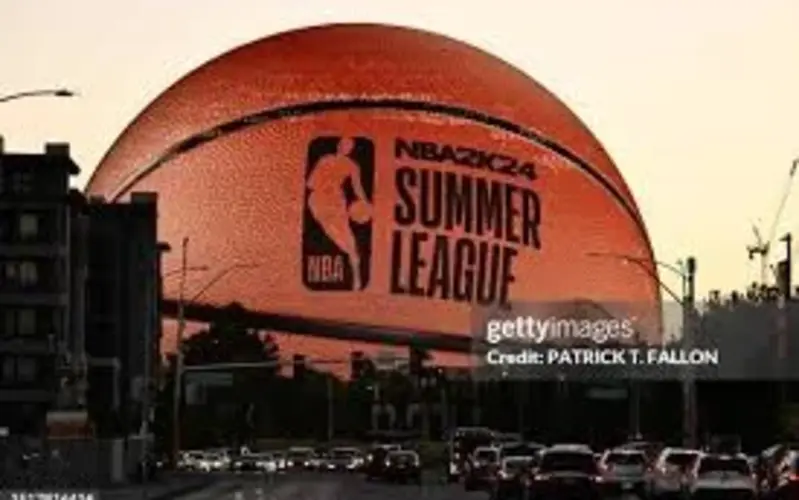
The announcement came after years of speculation, negotiations, and shifting league economics: the NBA’s Board of Governors have officially approved expansion to Las Vegas and Seattle.
The decision marked the first expansion since 2004 and reflected a league that had grown more global, more valuable, and more willing to embrace new markets. Las Vegas, once considered an unlikely candidate due to its association with gambling, had transformed into a major sports hub, already home to successful franchises in hockey and football. Seattle, meanwhile, had remained one of the most persistent absences in professional basketball—a city with deep roots in the game and a fanbase that never fully moved on.
The league’s official statement emphasized both opportunity and restoration. Las Vegas represented the future: a fast-growing market with a built-in entertainment infrastructure and a proven ability to host major events. Seattle represented continuity: a return to a city with a rich basketball history and a longstanding connection to the NBA.
Ownership groups in both cities had spent years preparing for this moment. In Las Vegas, plans centered around a state-of-the-art arena near the Strip, designed to blend sports with spectacle. In Seattle, the focus was on leveraging an already modernized arena and reconnecting with a legacy that dated back decades.
With expansion approved, attention shifted to logistics. The league outlined a timeline that included expansion fees—reportedly in the billions—along with an expansion draft that would allow both new teams to build competitive rosters. Existing franchises would be required to protect a set number of players, leaving others available for selection.
There were also broader implications. Expansion meant an increase in total teams, which would likely require adjustments to conference alignment and scheduling. Discussions emerged about balancing competitive fairness while preserving rivalries and minimizing travel demands.
Economically, the move was seen as a major milestone. Expansion fees would be distributed among existing team owners, while new markets would drive additional revenue through media rights, sponsorships, and merchandise. Las Vegas, in particular, was expected to become a marquee destination for nationally televised games and events.
Culturally, the impact was just as significant. Seattle’s return filled a gap that had lingered since its previous franchise relocated, restoring a historic basketball city to the league’s map. Las Vegas, on the other hand, symbolized how much the NBA—and professional sports as a whole—had evolved in its relationship with entertainment and betting.
As branding, team names, and front-office structures began to take shape, the expansion signaled a new chapter for the NBA. Two cities, long discussed in league circles, were no longer hypothetical. They were officially part of the future of professional basketball.