

























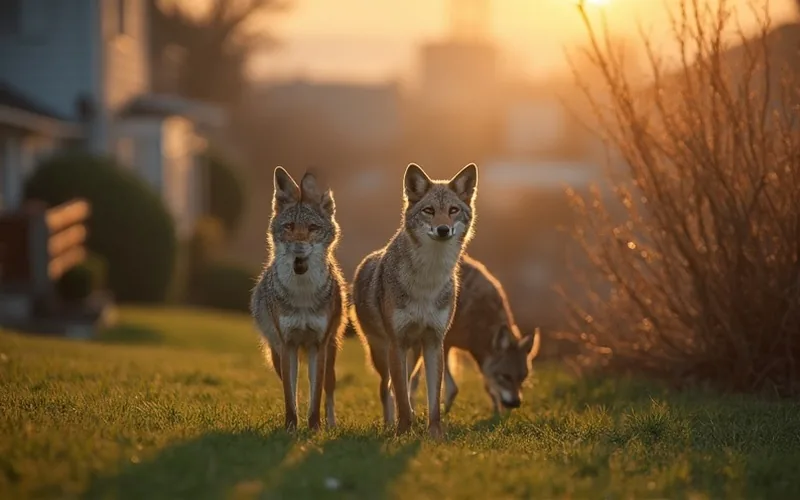
Ohio residents may see more coyotes in the coming weeks as the animals enter their mating season.
Coyote mating season in Ohio typically occurs from late January through March, according to Lindsey Krusling, communications specialist for the Ohio Division of Wildlife.
“They tend to be more active and visible as they travel to find mates, establish territories, and call more often, so this does cause an increase in sightings,” Krusling said.
Coyotes, which resemble medium-sized dogs and usually have a coat of gray, rusty brown and off-white, can be found in all of Ohio’s 88 counties. While many wildlife species avoid developed areas, coyotes are highly adaptable and thrive in a variety of habitats, including suburbs and cities.
“They’re an extremely adaptable animal, so you’ll find them also in the suburbs and the cities. They’re very widespread,” Krusling said.
Coyote attacks on people are extremely rare, Krusling said. Across the United States and Canada, only two fatal coyote attacks on humans have been recorded, according to the nonprofit Humane World for Animals.
“Coyotes are very curious animals, but generally fearful of people,” Krusling said. “If you do see one, clap your hands or shout to scare it off. If the coyote is not afraid of you and does not run away, contact a nuisance trapper.”
Although coyotes usually avoid humans, they may behave aggressively toward pets. Coyotes may be seen during the day, but are typically more active around dawn and dusk. Krusling recommended pet owners be especially vigilant during these times.
“The males can definitely be more protective, and during this time of year, they might view pets as competition or a threat,” Krusling said. “We always recommend you keep your small dogs or cats inside, or if you let them out at night, stay with them.”
Coyotes are omnivores and may prey on livestock, including chickens, sheep, goats and newborn calves. To help keep coyotes away, Krusling recommends residents remove pet food and garbage from their yards, as well as any stray food around grills.
Coyote litters, which typically include five to 10 pups, are usually born in dens in March or April. Coyotes may dig their own dens or use hollow logs, brush piles or existing burrows. At about three weeks old, the pups leave the den under parental supervision.
The family unit — mother, father and pups — stays together through summer and into mid-fall, when the young often establish their own territories. Some may remain with the family through the following year to help care for the next litter.
Anyone concerned about a coyote in their area can call 1-800-WILDLIFE for assistance finding a local trapper. Hunting coyotes is legal in Ohio if hunters follow state regulations.
Krusling also advised residents to carefully observe any animal they believe to be a coyote, as it could be a stray dog. Coyotes generally have a sleeker build, narrower snout and longer legs than dogs. If the animal is a stray dog, residents should contact their local humane society or dog warden.