






















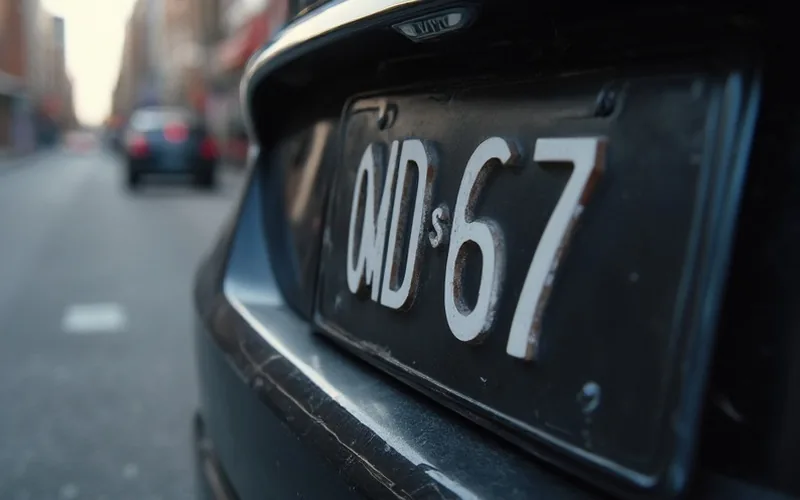
COLUMBUS, Ohio — An Ohio lawmaker is seeking to give drivers a new license plate option featuring a black background and white lettering.
Senate Bill 358, introduced Feb. 10 by Sen. Nathan Manning, R-North Ridgeville, would authorize the Ohio Bureau of Motor Vehicles to issue “blackout” license plates. The design would not include county identification stickers or the phrase “Birthplace of Aviation,” both of which are currently required on standard Ohio plates.
“Blackout license plates were included in the governor’s version of the operating budget last year,” Manning said in a statement. “It did not make it in the final version, but I heard from numerous constituents asking that it be something we pursue through legislation. I was happy to introduce this bill to provide more options for Ohio drivers when choosing license plates.”
The proposed blackout plate would carry an annual $20 fee, plus a $10 administrative fee, in addition to standard vehicle registration fees, which range from $36 to $66 per year depending on local taxes, according to the Ohio Legislative Service Commission. Standard license plates are included with regular registration fees.
Specialty and personalized plates in Ohio carry additional annual charges. For example, a personalized plate has a $50 annual fee, while a specialty Ohio State University plate costs $35 per year, including administrative costs.
According to published reports, nine states currently offer blackout license plates. Iowa began offering the plates in 2019, and Indiana became the most recent state to introduce them in August 2025. The Indiana Bureau of Motor Vehicles reported in October that its blackout plate surpassed 40,000 sales, generating $1.3 million in revenue.
Senate Bill 358 has been referred to the Senate Transportation Committee, where it awaits its first hearing. The bill must be reviewed in committee hearings, where residents may testify and lawmakers can propose changes, before it is considered by the full Senate and House. If approved by both chambers, the bill would go to Gov. Mike DeWine for final approval.